Overall Market Overview
The global shipping market continues to face tight supply and rising cost pressures, driven by strait blockages, soaring bunker fuel prices, and widespread vessel rerouting practices. These adverse factors have collectively squeezed effective shipping capacity, pushed up overall logistics costs, and triggered a continuous uptrend in ocean freight rates. Major trans-Pacific and Europe-bound liner routes witness a daily freight rate increase of around 1%, with container space remaining extremely scarce. Advanced cargo booking is highly recommended to secure stable shipping arrangements and avoid delivery delays.
Freight Rate Dynamics & Market Supply-Demand Changes
Since June, the global shipping sector has entered a dual growth cycle of cargo volume and freight tariffs, with most mainstream routes suffering from severe container space shortages. Two core factors fuel this market uptrend: forward peak-season inventory preparation by global importers, and ongoing capacity losses & cost increments caused by geopolitical frictions and regional transit disruptions.
Asia-Europe and Asia-Pacific liner routes stand out with the most drastic freight hikes, showing strong upward momentum in spot rates. Meanwhile, traditional seasonal market rules have been completely broken, eliminating the conventional peak-off peak fluctuation pattern. The North American shipping market remains overloaded with sustained high cargo demand, mainly boosted by the FIFA World Cup (kicked off on June 11) and Amazon Prime Day promotional activities throughout June, which generate massive cross-border e-commerce and general cargo shipping needs.
Global Port Operation & Route Congestion Analysis
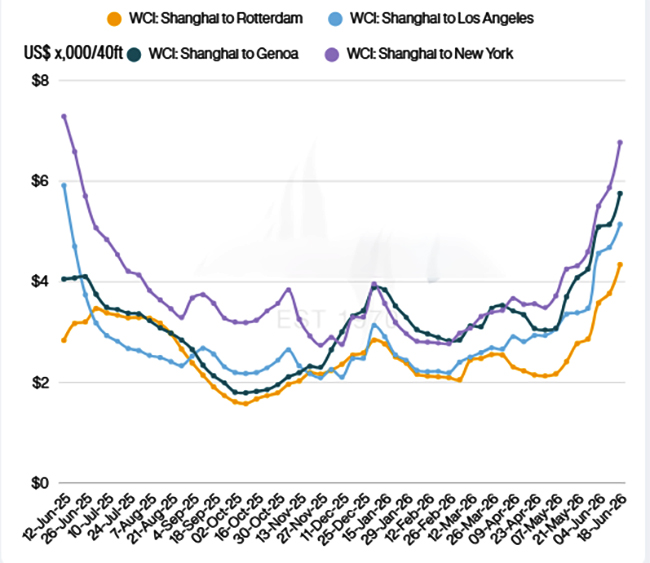
Widespread port congestion and proactive route network adjustments by major shipping carriers constitute the core characteristics of the current global shipping market, further exacerbating capacity tension and shipping delays.
1. European & American Core Ports
The overall operational efficiency of mainstream European and American ports has declined noticeably, with the average vessel berthing and staying cycle rising to 3.36 days. Specific data shows that the average vessel residence time at Rotterdam Port reaches 2.87 days, while Los Angeles Port suffers more severe congestion with an average stay of 5.54 days. Slow vessel turnover further reduces effective shipping capacity and prolongs cargo transit cycles.
2. Emerging Market Ports
Ports in emerging markets face more prominent congestion problems. Key logistics hubs including Moomba and Dar es Salaam in Africa, Nhava Sheva Port in India, and major Thai ports are experiencing severe operational stagnation. The cargo pickup delay at individual ports has exceeded 7 days, severely restricting the timely delivery of engineering accessories such as marine shear studs and delaying the construction progress of overseas marine and port projects.
Latest Spot Freight Rate Statistics (Shanghai Export, US$/40ft Container)
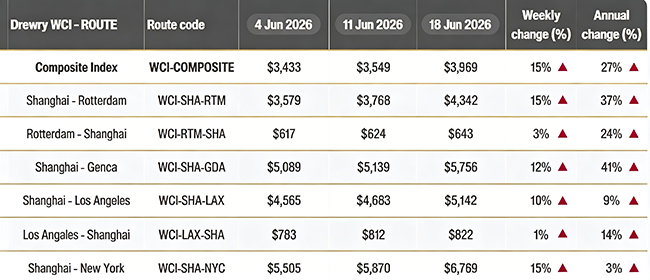
The following table sorts the latest weekly average spot export prices of mainstream routes from Shanghai, covering core European, Mediterranean and North American lines, providing accurate tariff reference for bulk cargo exports including shear studs:
· Europe Route (40HC): USD 4,432/container
· Mediterranean Route (40HC): USD 5,756/container
· US West Coast Route (40HC): USD 5,142/container
· US East Coast Route (40HC): USD 6,769/container
Industry Outlook for Shear Stud Logistics
Against the backdrop of sustained shipping market volatility, the export logistics of marine shear studs will continue to face cost and schedule pressures in the short term. On the one hand, tight container space and soaring freight rates will keep pushing up the cross-border transportation costs of steel structural fasteners represented by shear studs. On the other hand, port congestion and route adjustments will increase the risk of shipment delays for engineering supporting materials.
It is recommended that foreign trade enterprises engaged in shear stud exports adopt advanced booking, batch shipment and flexible route selection strategies to hedge market risks, stabilize delivery cycles, and ensure the stable supply of supporting components for global marine engineering, port construction and offshore facility projects.