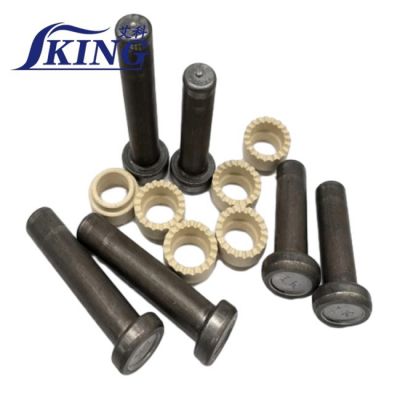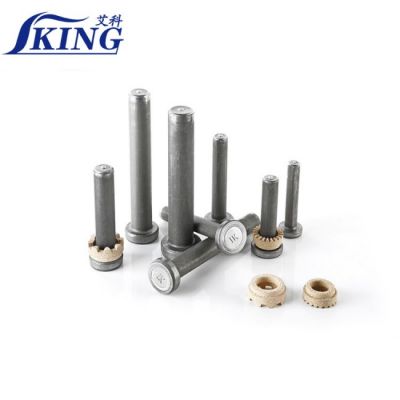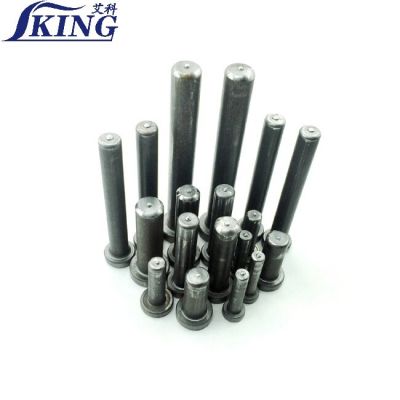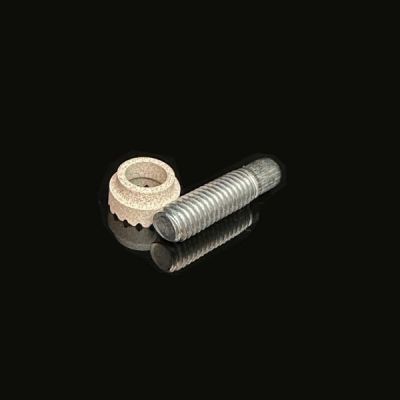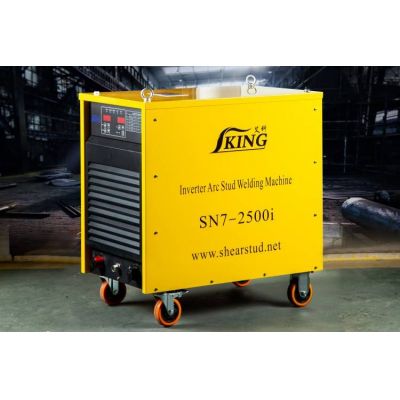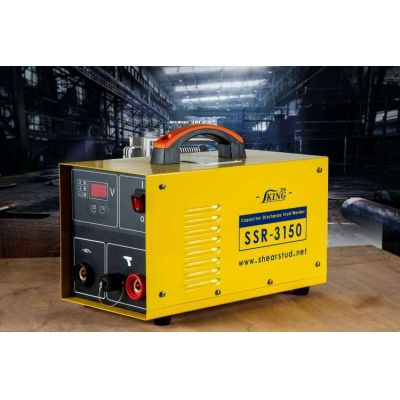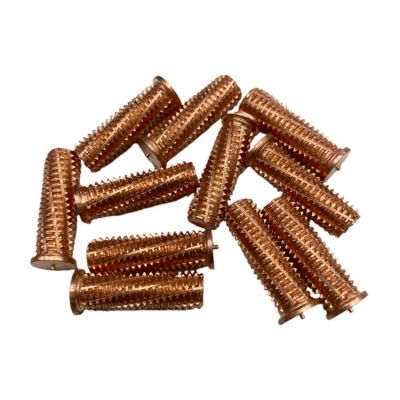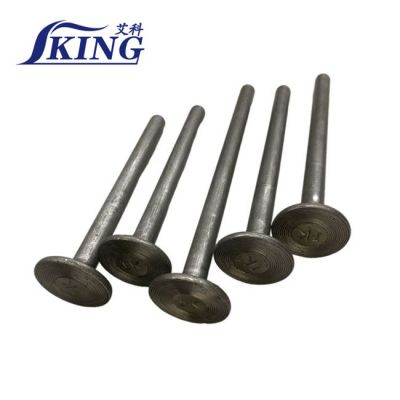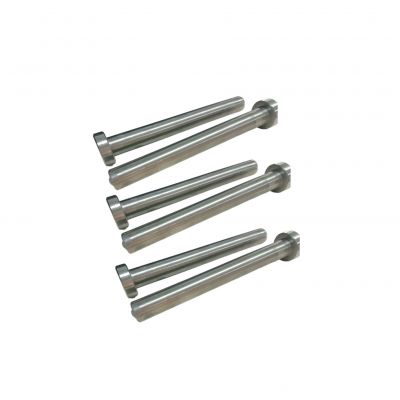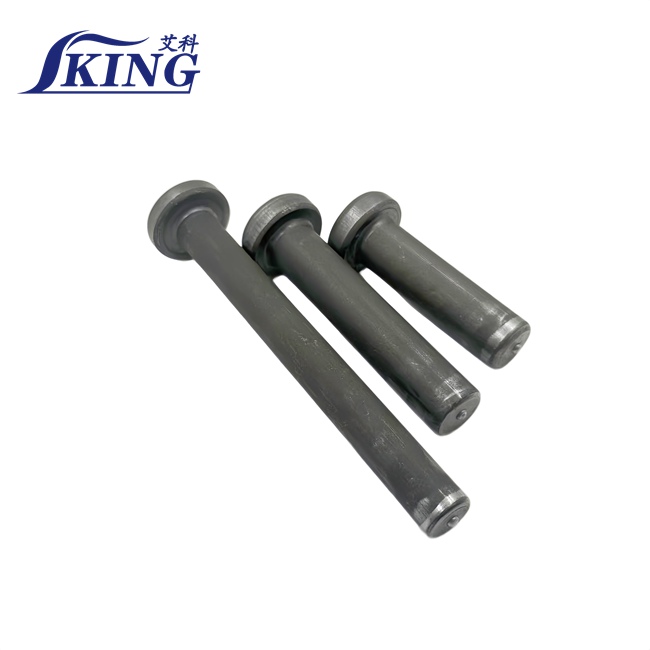
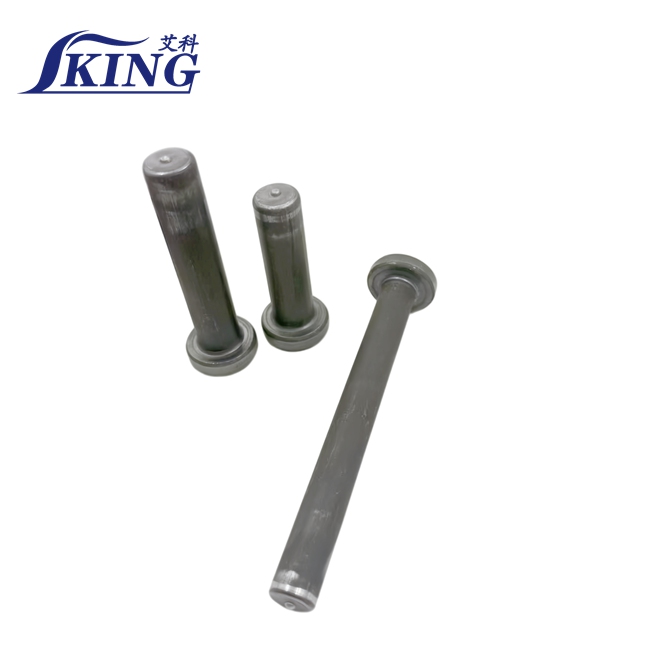
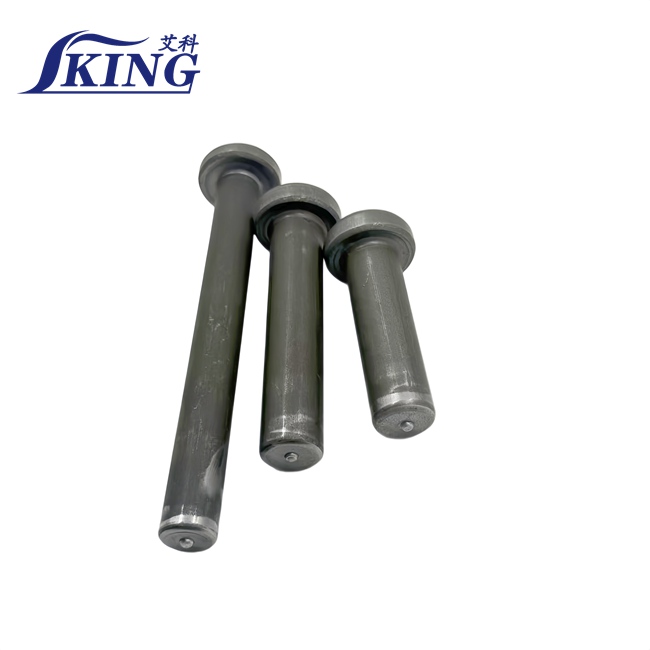
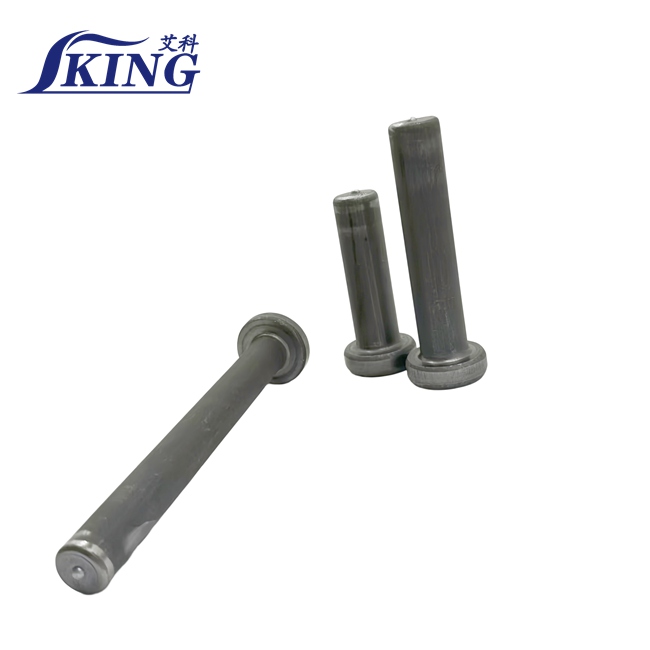
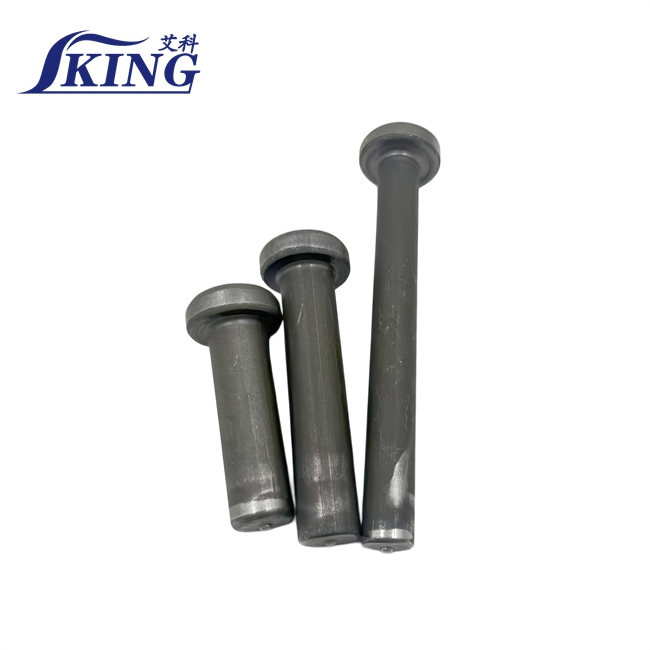
This BS EN ISO 13918 shear stud is made of mild carbon steel. It adopts arc stud welding for steel‑concrete composite connection. Diameter ranges from 13mm‑25mm with lengths 50‑300mm, custom sizes are acceptable. Black oxide finish, widely used in bridges, high‑rise buildings and airport projects.
IKING NP EN ISO 13918 shear studs are engineered to establish a strong mechanical connection between steel beams, steel decks and concrete slabs in composite construction. These headed shear studs help transfer horizontal shear forces at the interface of steel and concrete, reducing relative movement and enabling both materials to work together as a unified structural system.
Unlike standard bolts or common fastening components, EN ISO 13918 shear studs are specifically designed for arc stud welding installation. During construction, the stud is welded directly to the steel substrate while a ceramic ferrule protects the welding zone, helping to create a consistent, high-strength bond. This installation method is widely recognized in modern building and infrastructure projects because it supports fast on-site assembly and reliable load transfer.
IKING NP EN ISO 13918 shear studs are suitable for projects that require dependable shear connection performance, especially in steel-concrete composite floors, bridge decks, car park structures and industrial building frameworks.
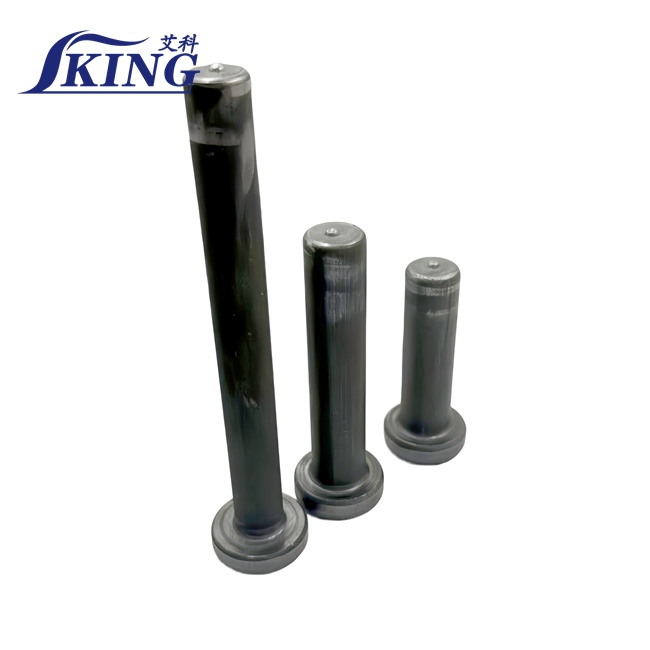
IKING NP EN ISO 13918 shear studs are manufactured from mild carbon steel, offering good weldability and stable mechanical performance for composite structure applications. The product range covers diameters from 13mm to 25mm, making it suitable for different load requirements and project specifications.
Standard available lengths include 80mm, 100mm, 120mm, 150mm and 200mm. For special design conditions, custom lengths can be produced according to customer drawings or technical requirements. The surface condition is plain finish without additional coating, which helps maintain direct contact between the steel stud and surrounding concrete.
Arc stud welding is the recommended installation method. A matching ceramic ferrule is generally required during welding to protect the molten pool, reduce spatter and improve weld consistency. For packaging, the studs are usually packed in cartons and then secured on wooden pallets, making them suitable for export shipping and bulk delivery to construction sites.
| Item | Parameter |
|---|---|
| Material | Mild carbon steel |
| Diameter Range | 13mm-25mm |
| Available Lengths | 80mm-200mm, custom lengths supported |
| Surface Condition | Plain finish, no coating |
| Welding Method | Arc stud welding |
| Application Matching | Steel-concrete composite connection |
| Packing | Carton and wooden pallet for export packing |
IKING NP EN ISO 13918 shear studs are commonly used in steel-concrete composite construction, where the connection between steel members and concrete significantly affects overall structural performance. One of the most frequent applications is composite floor systems in commercial buildings, where shear studs connect steel beams to concrete slabs and help improve floor stiffness and load-bearing capacity.
These shear studs are also widely used in bridge construction, especially in steel-concrete composite bridges and viaduct decks. By transferring shear forces between the steel girder and the concrete deck, the studs help distribute loads more evenly and enhance the long-term performance of the bridge structure.
In addition, NP EN ISO 13918 shear studs are suitable for multi-storey car parks, industrial warehouses, steel frame workshops, prefabricated building modules and other projects involving composite steel and concrete structures. They are particularly useful where fast installation, consistent weld quality and reliable shear connection are required.

Choosing the right shear stud supplier is important not only for product quality, but also for installation support, delivery reliability and long-term structural confidence. At IKING, we focus on manufacturing EN ISO 13918 shear studs that meet the general requirements of composite construction projects.
From us, you can expect more than just product supply. We offer professional product selection support, helping customers identify suitable diameters, lengths and packaging options according to project specifications. If standard sizes do not meet design requirements, we can also discuss custom length production based on provided drawings or technical data.
Our team pays attention to export order details, including packaging, quantity control, documentation and delivery coordination. This is especially useful for customers who need to purchase shear studs for international construction projects, bridge works, high-rise buildings or industrial facility developments.
We maintain a customer-oriented service process, from initial inquiry and quotation to production arrangement and after-sales follow-up. If you have questions about installation, matching ceramic ferrules, material performance or bulk order availability, we can provide practical information to help you make better purchasing decisions.
Q1: What is NP EN ISO 13918 shear stud used for?
A1: It is mainly used as a shear connector in steel-concrete composite structures, helping to transfer shear forces between steel beams and concrete slabs.
Q2: What is the installation method for these shear studs?
A2: Arc stud welding is the recommended installation method, and a matching ceramic ferrule is usually required during welding.
Q3: Can I order non-standard lengths?
A3: Yes, custom lengths can be discussed according to your drawings or technical requirements.
Q4: What materials are NP EN ISO 13918 shear studs made of?
A4: They are generally made of mild carbon steel, which offers good weldability and mechanical strength.
Q5: Are these shear studs suitable for bridge construction?
A5: Yes, they are commonly used in composite bridges, viaduct decks and other steel-concrete infrastructure projects.